Find the Booking System That Truly Fits You
From local options to global SaaS platforms, we break down pricing structures, core features, and the business size each is built for. All costs laid out transparently — full comparison in 5 minutes.
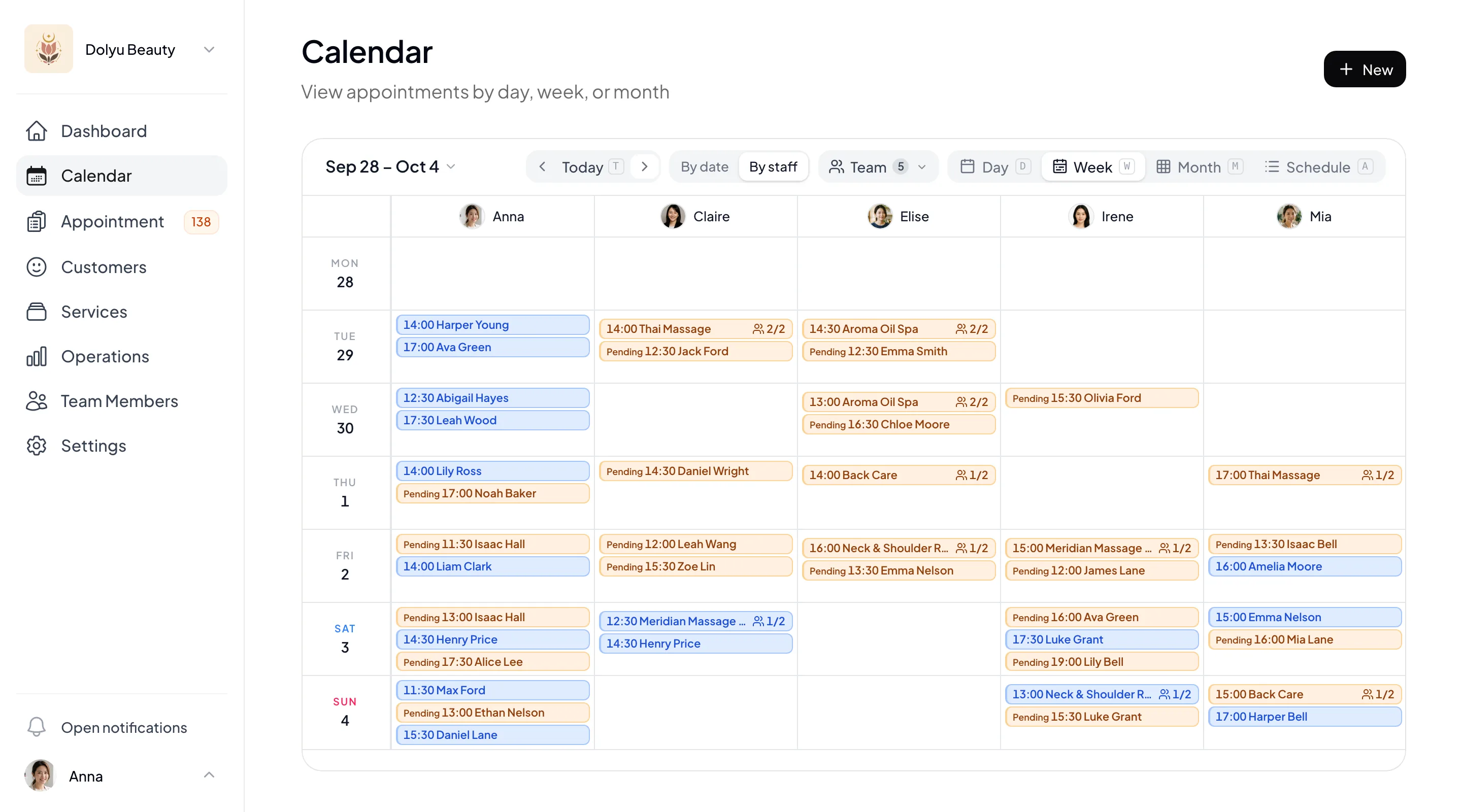
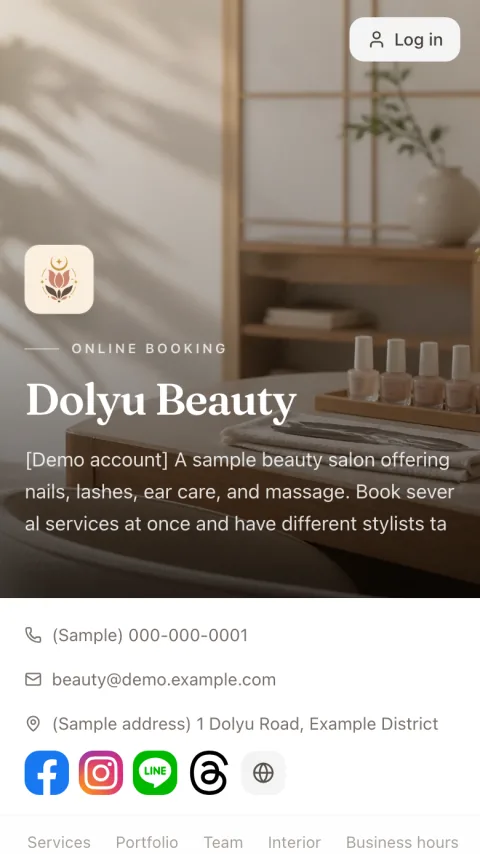
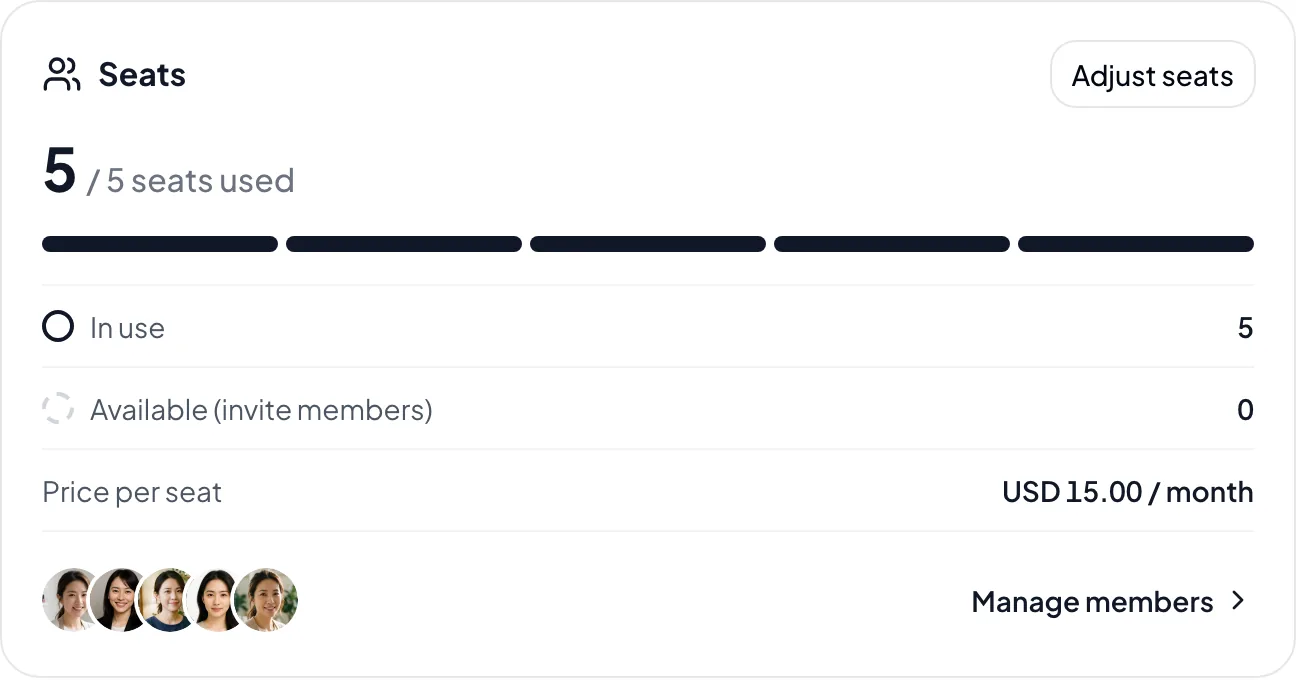
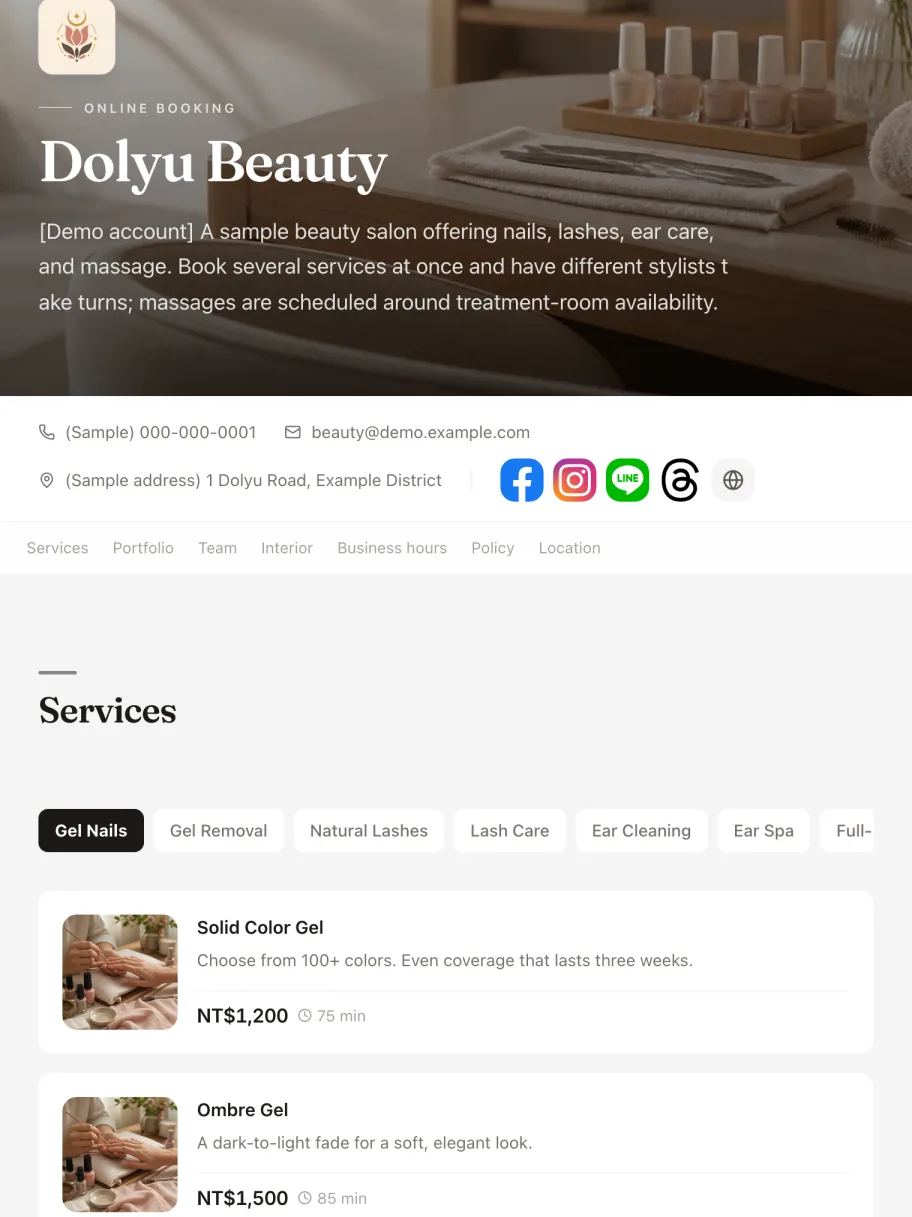
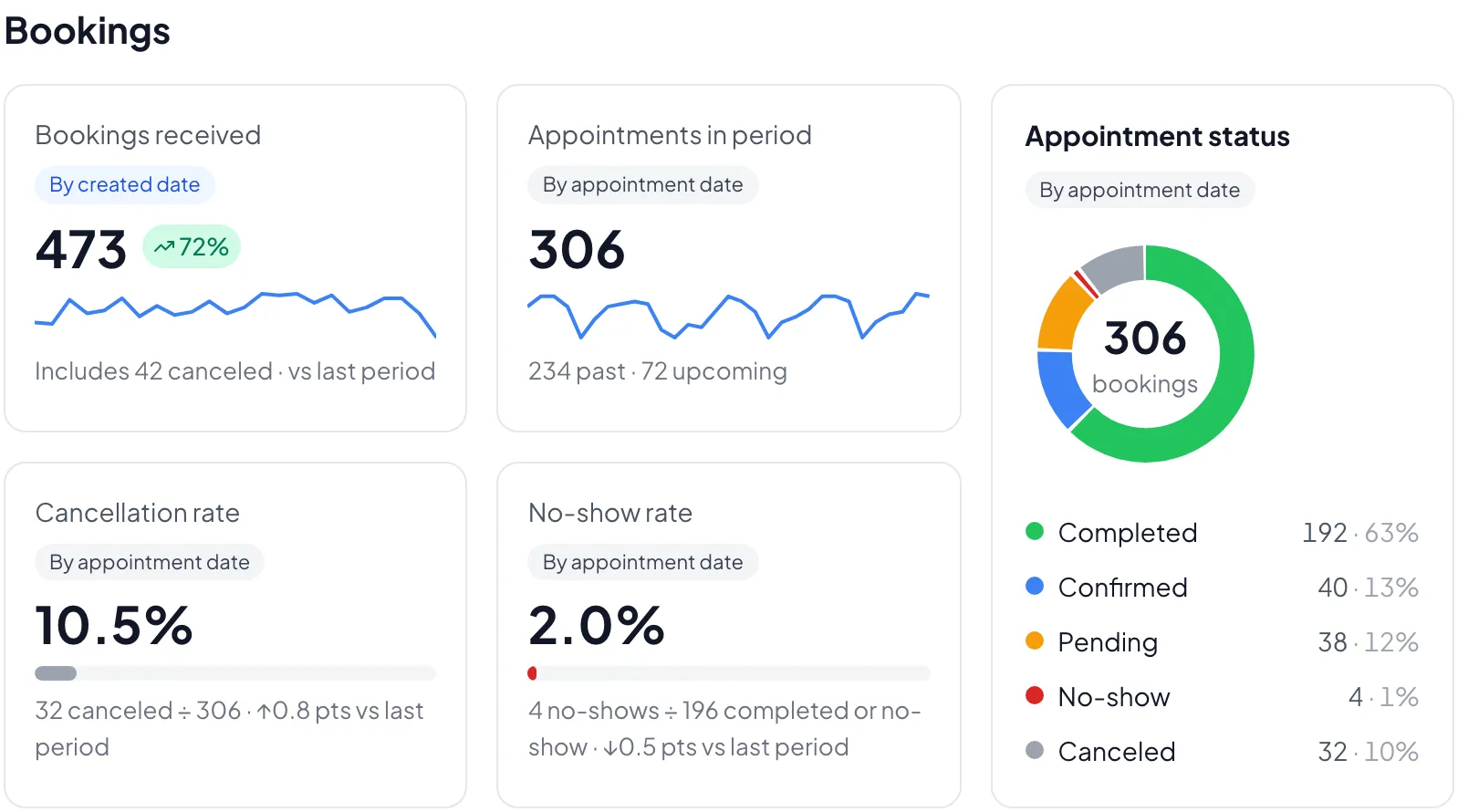
This page compares 16 leading booking systems — Taiwan-based, international, and Japanese platforms — on monthly fees, LINE integration, and free plans. Monthly fees in the Taiwan market typically range from NT$300 to NT$1,000+ per person, and some platforms add commissions or messaging fees. Dolyu is US$15/person/month flat, with a branded booking page (no app download, no LINE friend-add required), automatic LINE reminders, and four-dimension reports — plus a 14-day free trial.
Pricing & Features: 16 Booking Systems in One Table
Start with the big picture: how each system charges, whether it integrates with LINE, and whether you can start free. Click any system for a full feature-by-feature analysis.
14-day free trial (all features)
Starter plan NT$0 (80-member cap, no LINE integration)
See full comparison14-day free trial
See full comparison30-day free trial (no credit card required)
See full comparisonFree plan NT$0 (30 LINE new bookings/month)
See full comparisonFree plan (50 bookings/month)
See full comparisonFree plan (1 event type)
See full comparisonFree plan (unlimited seats, no online payments)
See full comparisonFree ¥0 plan: 50 bookings/mo, 2 pages, overage +¥1,078/50
See full comparisonFree ¥0 plan: 50 bookings/mo, 250 clients, only 43 features
See full comparisonTool itself free, but requires a HOT PEPPER Beauty listing contract; listing and success fees undisclosed
See full comparisonThis competitor comparison was compiled by Dolyu from publicly available information on official websites (last updated: July 2026) and may not reflect the latest changes. Verify pricing and features on each official site. For reference only; no representation or warranty.
How to Choose a Booking System: 5 Things to Sort Out First
LINE Integration Is a Must — But Don't Get Locked In
LINE has over 20 million active users in Taiwan, so booking confirmations and pre-appointment reminders via LINE push are the baseline for any booking system here. What's actually worth comparing is how it's integrated: the entire booking flow inside LINE (clients must add you as a friend first), or an independent branded booking page with LINE notifications (clients can also book directly from Google or Instagram). The former drives stickiness; the latter reaches further and keeps customer data in your own hands.
Pricing Structure: Flat Monthly Fee, Commission, or Usage-Based?
Three models are common in the Taiwan market: flat monthly fees (predictable costs), per-booking commissions (costs climb fast at volume), and usage-based billing (by message or booking count). Run the numbers against your peak season — a low monthly fee plus commission can end up costing more than a flat-fee plan. Also check whether LINE message fees are included or billed separately at LINE's official rates.
Do Clients Need to Download an App or Add a Friend?
Every extra step loses bookings. Requiring clients to download an app or add you on LINE before they can book is a real barrier for new clients, older clients, and international visitors. A web booking page — no download, no signup, just a link — converts best, with LINE notifications layered on for reminders. That combination is currently the most client-friendly setup.
Depth of Reports and Customer Management
A booking system should do more than take orders. Which service earns the most, which client is due for a return visit, how high your cancellation and no-show rates run — you only see these with reports and a CRM. Check whether the system offers multi-dimension analytics (service, staff, client) and whether customer data can be fully exported, so you're not locked in if you ever switch.
When Should You Upgrade From Google Forms and Manual Tracking?
Under a few dozen bookings a month, Google Forms plus a calendar still works. Past a hundred, the time spent manually confirming, reminding, and rescheduling costs more than a system's monthly fee — and without automatic reminders, no-show rates climb. A practical rule: once you spend more than 30 minutes a day handling booking messages, it's time to adopt a system.
Taiwan-Based Booking Systems Compared
Local systems share the same strengths: deep LINE integration, Taiwan payment support, and responsive Chinese-language service. The differences lie in pricing structure (flat monthly fee vs. free-to-start-then-upgrade) and industry focus (most center on beauty).
夯客 Hotcake
“#1 Most Intuitive and Powerful Booking & Membership System”
Hotcake is built around LINE booking with a NT$0 starter plan and 3,000+ brands on board. Booking happens inside LINE — there's no independent branded booking page, and customer data stays inside the LINE ecosystem. Dolyu is US$15/person/month and provides a standalone branded booking page (with portfolio display), portable CRM customer data, and four-dimension analytics — LINE can change its rules, but your customer data and booking flow always stay yours.
Freetime
“Leave the expertise to you — leave the bookings to Freetime”
Freetime at NT$300/month is great value and handles day-to-day booking well. But once you want to build a brand image, understand which services earn the most, and retain high-value clients, you'll find its portfolio page, operational reports, and client management are all fairly basic. Dolyu costs about NT$180 more per month and adds a branded portfolio page, four-dimension reports, and client CRM all at once — the extra cost is an investment in growing your business.
SayDou 神美
“Make beauty a great business, and business beautifully run”
SayDou's NT$330/person/month all-inclusive plan is a strong deal long-term — but the first year requires a NT$5,000 setup fee, meaning you've paid for over a year before you even start. Dolyu is US$15/person/month (about NT$480) with zero setup fee — decide today, go live today, and continue after a 14-day trial if you like it.
QLiEER 客立樂
“Business management system built for the beauty industry”
QLiEER uses annual tiered plans (Seedling from NT$950/month, billed annually), targeting beauty chain stores with POS hardware integration and staff payroll management. Dolyu is US$15/person/month (approx. NT$480), monthly billing, no contract, with core appointment management, reports, and branded page all included — suited to solo operators through small studios.
17FIT
“The online software that brings you customers”
17FIT uses annual contracts with custom pricing — no publicly listed monthly fee, minimum one year, no refunds. It has a consumer app for client discovery, POS, and payroll management, suited to mid-to-large venues with scale. Dolyu is US$15/person/month, pricing publicly listed, monthly billing, no contract, 14-day free trial, core features live in 5 minutes.
BeautinQ 美業歐巴
“Online booking system built for beauty + the ultimate LINE membership tool”
BeautinQ uses a modular plan structure with a 100-order/month cap on the starter plan. Advanced features like AI CRM, prepaid wallet, and interactive marketing require add-on modules, and pricing requires a sales consultation. Dolyu is US$15/person/month — pricing publicly listed, unlimited orders, all core features included, self-serve setup in 5 minutes.
BookNow 預約系統
“Online booking × website integration — free up your time”
BookNow offers four plans starting at NT$399, tiered by monthly booking volume, including e-vouchers, payroll calculation, and Google Calendar sync. Each plan has a monthly booking cap — the lowest plan allows 1,000 bookings — and you'll need to upgrade if you hit the ceiling in peak season. Dolyu is US$15/person/month (approx. NT$480) with no booking limit and four-dimension reports and branded page all included.
樂創約
“LINE booking, automated reminders, cross-industry solution”
Onlinebooking.tw has a free plan (30 LINE new bookings/month) and an advanced plan at NT$399/month, including auto client segmentation and SMS reminders. No portfolio display on the booking page; reports are fairly basic. Dolyu is US$15/person/month with a branded booking page that includes portfolio display and four-dimension reports — flat fee regardless of usage.
International Booking Platforms Compared
International platforms are mature and rich in integrations, but LINE integration is generally absent and localization varies. A good fit for teams whose clients are mostly overseas, or who are already comfortable with English-language tools.
Fresha
“The #1 booking software for salons and spas”
Fresha uses a transaction commission model: 2.79% + US$0.20 per online payment, 20% commission on Marketplace new client first visits, and advanced features like Loyalty sold separately. No LINE integration, no Traditional Chinese interface, no Chinese-language support. Dolyu is US$15/person/month flat, zero commission, LINE integration, Traditional Chinese, custom timezone, and multi-currency all included.
SimplyBook.me
“Global online appointment scheduling system”
SimplyBook.me is an international booking platform with a booking-count limit on the free plan and volume-based billing on paid plans. Feature Apps are purchased individually. No LINE integration, Traditional Chinese is machine-translated, no Chinese-language support. Dolyu is US$15/person/month with deep LINE integration, native Traditional Chinese, custom timezone, and multi-currency support.
Calendly
“Free Online Appointment Scheduling Software”
If someone told you "Calendly is a booking system too" — they're not wrong, but it's a different kind of tool. Calendly is for scheduling B2B meetings. Dolyu is for managing clients, sending LINE notifications, and reading four-dimension reports. Once you understand that difference, the choice is straightforward.
Setmore
“The simple and free way to schedule appointments online”
Setmore's free plan with unlimited seats sounds compelling — until you discover: English-only interface, no LINE integration, and online payment not included in the free plan. Using Setmore in Taiwan means working around problems it was never designed to solve for you. Dolyu is US$15/person/month — Traditional Chinese, LINE push notifications, member points — none of those three friction points from day one.
Acuity Scheduling
“Online Appointment Scheduling Software”
Acuity Scheduling is Squarespace's international scheduling tool, well-suited to Western solopreneurs and SMBs. It's solid, but the interface is English-first, there's no LINE integration, and SMS, API, and multi-timezone are locked behind higher tiers. For Taiwan and Asia clients, Dolyu wins on native LINE, Traditional Chinese UI, and single pricing.
Japanese Booking Systems Compared
Three systems that often come up when serving the Japanese market or Japanese clients. They share a dependence on Japan's local ecosystem (marketplace entry points, JPY pricing) — Taiwanese businesses should check Chinese-language support and payment constraints before adopting.
STORES 予約
“All-in-One Booking System (free tier)”
STORES 予約 is the booking module of a Japanese all-in-one commerce platform — free to start, 180+ industries, with sibling EC and POS products. It's full-featured, but LINE is via mini-app link (not Official Account rich-menu control), the UI is Japanese-first, and each plan has monthly booking caps with overage fees. Native LINE control, a Chinese UI, and no booking-cap anxiety — Dolyu delivers all three.
RESERVA
“Cloud Booking System (350+ industries)”
RESERVA is a feature-rich Japanese cloud booking system covering 350+ industries with finely tiered plans. Coverage is broad, but LINE integration is a +¥3,300/month add-on, the UI is Japanese-first, the free plan opens only 43 of 116 features, and detailed analytics and phone support are locked to higher tiers. For built-in LINE, a Chinese UI, and simpler onboarding, Dolyu builds these in — no tiers.
SALON BOARD
“Salon booking tied to HOT PEPPER Beauty”
SALON BOARD is Recruit's salon booking/CRM system. The tool itself is free, but it can't be used alone — it requires a HOT PEPPER Beauty listing contract. It brings Japan's largest beauty acquisition portal, but your booking page sits price-compared against rivals in the portal, bookings via the portal incur a success fee, and both its rate and the listing fee are undisclosed (inquiry required). For an own-branded booking page, freedom from commission, and keeping regulars on your own LINE, Dolyu is your retention home.
Booking System Comparison FAQ
More questions? Reach out — a real person will reply.
Yes — some systems offer free plans, but usually with limits: member caps, no LINE integration, or reduced features (for example, Hotcake's starter plan is NT$0 with an 80-member cap and no LINE integration). Free plans are good for testing whether your clients will book online; once volume grows, most businesses upgrade for automatic reminders and reports. Dolyu takes a different approach — a 14-day free trial with every feature included, so you can evaluate the full product.
There is no single answer — it depends on your situation. Clients living on LINE with a beauty focus → Taiwan-based systems have the deepest integration (Hotcake, SayDou, and others). Serving overseas clients or needing multiple languages → international platforms (Fresha, SimplyBook, Calendly). Wanting an independent branded booking page, a flat fee, and setup in minutes → Dolyu (US$15/month, 14-day free trial). Use the table above to compare monthly fees, LINE integration, and free plans line by line.
Start by separating the two approaches. One completes the entire booking flow inside LINE (clients must add you as a friend first) — high stickiness, limited reach. The other pairs an independent branded booking page with automatic LINE notifications, so clients can book from Google search, Instagram, or any browser while LINE handles confirmations and reminders. If your new clients mostly come from search and social media, the second approach usually converts better.
Taiwan-based systems are mostly priced per person per month, typically NT$300 to NT$1,000+; international platforms usually bill in US dollars. Beyond the monthly fee, watch for three hidden costs: per-booking commissions, LINE message fees (some systems bill these separately at LINE's official rates), and setup fees. Dolyu is US$15/person/month flat — no commission, no setup fee, monthly billing with no contract.
It depends on volume. Under a few dozen bookings a month, Google Forms and manual confirmation can cope. Past a hundred, the time cost of confirming, reminding, and rescheduling by hand exceeds a system's monthly fee — and without automatic pre-appointment reminders, no-show rates are usually noticeably higher. Solo studios arguably need automation most: your time is your capacity.
The key question is whether your customer data can come with you. Check that your current system exports customer lists; Dolyu supports customer data import, and services and time slots take about 5 minutes to set up. A proven approach: run both systems in parallel for a week or two during the trial — new bookings go through the new system while existing ones complete as usual — then switch fully once the flow feels right.
Three core differences. First, a branded booking page — clients book from any device via a link, no app download or LINE friend-add required, with your portfolio on display. Second, flat transparent pricing — US$15/person/month, no commission, no message surcharges, monthly billing with no contract. Third, no industry limits — beauty, fitness, education, consulting, and every other appointment-based service, backed by four-dimension reports and full customer CRM.
Compared enough? Try it yourself.
Automate your booking operations — put your time back where it belongs.